
 RU
RU EN
EN CN
CN
How to make money on a trademark
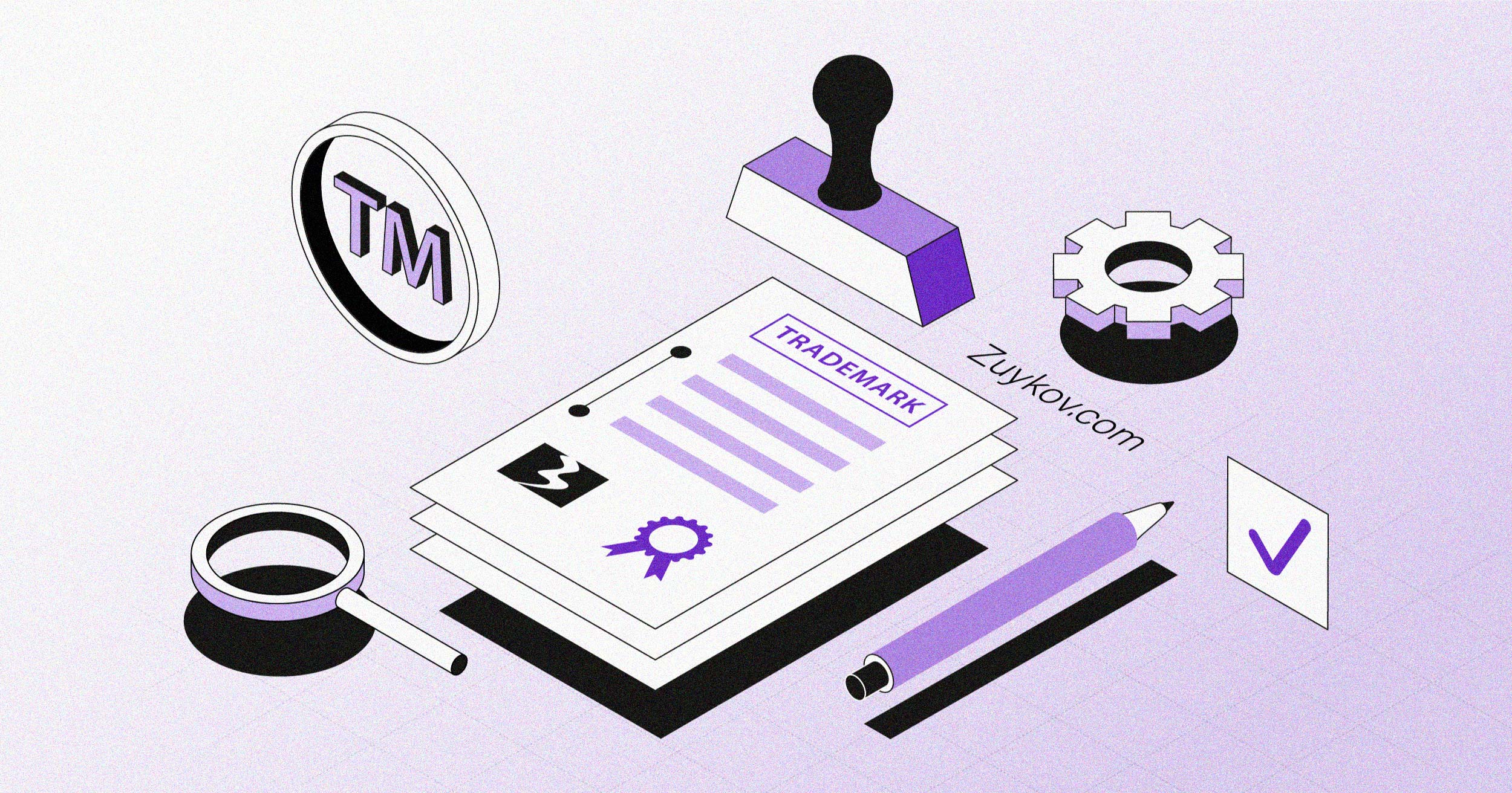

As is known, commercial organizations and entrepreneurs register a trademark primarily in order to use it for its intended purpose - for the individualization of their own goods (works, services), in respect of which the trademark is registered.
This is due to the fact that a strong trademark directly affects the promotion of goods and, as a result, increases sales. You can learn how to create such a trademark in the article of our experts ' article "How to come up with a strong trademark and avoid marketing mistakes", and here we want to talk about how else you can make money on a trademark in addition to direct sales.
Main Ways to Monetize a Trademark
According to Article 1484 of the Civil Code of the Russian Federation, the person in whose name the trademark is registered (the right holder) owns not only the exclusive right to use the trademark in any way that does not contradict the law (the exclusive right to the trademark), but also the right to dispose of the exclusive right to the trademark. This means that the right holder may, at his own discretion, allow other persons to use his trademark by entering into appropriate transactions.
The most common ways of disposing of the right to a trademark are licensing and commercial concession (franchising) - the conclusion of agreements on the basis of which third parties receive the right to use the trademark of the right holder under certain conditions, and the right holder receives appropriate remuneration from them. These methods are the most attractive for the right holder from the point of view of long-term monetization: they help to promote the trademark itself (increase its popularity) and expand retail chains, including in the regions, and also provide the right holder with additional regular income.
License Agreement and Features of Its Conclusion
According to Article 1489 of the Civil Code of the Russian Federation, under a license agreement, one party - the owner of the exclusive right to a trademark (the licensor) grants or undertakes to grant to the other party (the licensee) the right to use the trademark within the limits specified in the agreement, with or without specifying the territory in which the use is allowed, in relation to all or part of the goods for which the trademark is registered.
A license agreement for the right to use a trademark has several essential conditions, and each must be provided for in the agreement; otherwise, it will be considered not concluded (Article 1235 of the Civil Code of the Russian Federation).
Thus, the license agreement must indicate:
- information about the trademark (certificate number) and a list of goods in respect of which the right to use it is granted;
- specific ways of using the trademark. At the same time, it is possible to agree on both the widest possible list of methods of use specified in Clause 2 of Article 1484 of the Civil Code of the Russian Federation, and individual methods that are of interest to the licensee, for example, the right to place a trademark on the Internet, including using it in advertising, etc.;
- a condition on the amount of remuneration that the licensee must pay to the licensor, or on the procedure for determining it. At the same time, the remuneration can be agreed upon both in the form of fixed one-time or periodic payments, and in percentage deductions from income (revenue) or in another form. As a rule, many right holders choose a combined remuneration - a one-time payment in a certain amount and then periodic payments (royalties).
It is important to understand here that royalties, determined as a percentage of income, do not guarantee their receipt, because it depends on how the licensee's business will develop. If the amount of royalties is fixed and a payment period is set (for example, monthly), then the licensee will be obliged to pay the full amount of royalties, even if he does not actually use the trademark.
The territory of use of the trademark is not related to the essential terms of the license agreement, and if it is not agreed, the licensee will be able to use the trademark throughout Russia (Clause 3 of Article 1235 of the Civil Code of the Russian Federation).
The term of the license agreement is also not related to the essential conditions - if it is not determined by the agreement, then the agreement will be considered concluded for 5 years (Clause 4 of Article 1235 of the Civil Code of the Russian Federation). In any case, the term of the agreement may not exceed the term of the exclusive right of the right holder to the trademark (Clause 1 of Article 1491 of the Civil Code of the Russian Federation). The termination of the exclusive right to a trademark will automatically terminate the validity of the license agreement, even if it is concluded for a longer period.
Commercial Concession (Franchising) Agreement and Features of Its Conclusion
Under a franchise agreement, one party (the right holder) undertakes to provide the other party (the user), for a fee for a period of time or without specifying the term, the right to use in the user's business activities a set of exclusive rights belonging to the right holder, including the right to a trademark, a service mark, as well as the rights to other objects of exclusive rights provided for by the agreement, in particular, to a commercial designation, a trade secret (know-how) (Article 1027 of the Civil Code of the Russian Federation).
Unlike a license agreement, a franchise agreement makes it possible to grant the right to use not only the trademark, but also other objects of exclusive rights, as well as the business reputation and commercial experience of the right holder.
As a rule, such an agreement is concluded if the copyright holder already has a proven business model that can be scaled through franchising. For example, in Russia, franchises that work in the field of fast food (Kroshka Kartoshka, DodoPizza), coffee chains (Surf Coffee, Coffee Way), etc., are especially popular.
The popularity of franchising among users is because they can not only profit from the use of a strong foreign trademark, but also receive a ready-made business model, including assortment cards (product recipes), instructions for the design of premises, as well as other information and organizational support from the copyright holder. The copyright holder, in turn, receives the right to control the activities (quality of work) of the user.
The terms of a commercial concession that must be agreed upon in the contract include:
- a set of exclusive rights that the right holder grants to the user. Here it is necessary to indicate all the objects, the rights to which are granted to the user, as well as information individualizing them, in particular, a trademark certificate, patent, etc.
- the scope of the rights granted, in particular, the minimum/maximum number of outlets that the user must organize in a certain territory, the maximum volume of production, etc.
- a certain area of business activity, for example, the sale of goods received from the right holder or produced by the user himself, etc.;
- methods of using exclusive rights in relation to each object;
- remuneration of the right holder, which may be paid in the form of fixed one-time and/or periodic payments, deductions from revenue, margin on the wholesale price of goods transferred by the right holder for resale, or in another form provided for by the contract.
The term of the agreement is not related to the essential conditions. Here the rules are the same as for a license agreement (5 years, unless otherwise agreed, etc.). However, please keep in mind that any of the parties to the franchise agreement, which does not specify the term of its validity, has the right to withdraw from the agreement at any time by notifying the counterparty six months in advance, unless the agreement provides for a longer period (Clause 1 of Article 1037 of the Civil Code).
Form and registration of contracts
In conclusion, it should be noted that both agreements must be drawn up in writing; otherwise, the agreements are considered invalid (Clause 1 of Article 1490, Clause 1 of Article 1028 of the Civil Code of the Russian Federation).
In addition, the legislator is obliged to register with Rospatent the granting of the right to use a trademark, both under a license agreement and under a franchise agreement. In case of non-compliance with this requirement, the granting of the right to use is considered invalid (Clause 2 of Article 1490, Clause 2 of Article 1028 of the Civil Code of the Russian Federation).
Need help with a trademark?
We can help you:
— Develop and register a trademark;
— Draft a trademark license agreement;
— Arrange the assignment of exclusive rights;
— Draft a commercial concession agreement;
— Protect your trademark against infringement.